Home / Recent Bills / A joint resolution disapproving the rule submitted by the Financial Crimes Enforcement Network relating to "Anti-Money Laundering Regulations for Residential Real Estate Transfers".
SENATE · SJRES 15119 CONGRESS
A joint resolution disapproving the rule submitted by the Financial Crimes Enforcement Network relating to "Anti-Money Laundering Regulations for Residential Real Estate Transfers".
A joint resolution goes through the same process as a bill and carries the same legal
force once signed. One exception: a joint resolution proposing a constitutional
amendment is not presented to the President — it needs a two-thirds vote in
both chambers and then ratification by three-quarters of the states.
Bill vs. resolution, explained →
Summary
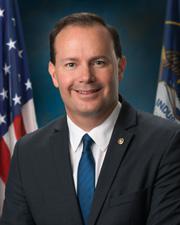
S.J. Res. 15 is a joint resolution introduced in the Senate on February 5, 2025, by Senator Mike Lee of Utah. The resolution seeks to disapprove a final rule issued by the Financial Crimes Enforcement Network (FinCEN) under the Department of the Treasury. The rule, published in the Federal Register on August 29, 2024 (89 Fed. Reg. 70258), establishes Anti-Money Laundering (AML) requirements for certain participants in residential real estate transactions, including title insurance companies, closing agents, and other settlement service providers. Under the rule, these entities would be required to implement customer due diligence programs, verify the identities of beneficial owners of legal entity customers, maintain records, and report suspicious activities related to residential real estate purchases. The joint resolution, if passed by both the Senate and House of Representatives and signed by the President, would nullify the rule under the Congressional Review Act (CRA), which allows Congress to overturn recently finalized federal regulations by a simple majority vote in each chamber. The resolution argues that the FinCEN rule oversteps the agency's authority, imposes unnecessary burdens on the real estate industry and homebuyers, and could hinder housing affordability and accessibility. Supporters of the resolution contend that the rule addresses a genuine gap in the U.S. AML framework, as real estate has been identified as a vulnerable sector for money laundering due to the high value of transactions and the relative anonymity they can afford. They argue that without such regulation, criminals could continue to exploit the real estate market to conceal illicit funds, undermining national security and financial integrity. The debate centers on balancing financial crime prevention with regulatory burden on industry and consumers, particularly in the context of housing costs and access.
Ask This Bill
Ask a specific question about this bill’s actual text — answers cite the section they come from.
+Addresses a significant gap in the U.S. anti-money laundering regime by extending scrutiny to the real estate sector, which is prone to abuse.
+Enhances national security by making it more difficult for criminals, corrupt officials, and terrorists to launder money through property purchases.
+Promotes transparency in real estate transactions, helping to unveil hidden ownership and prevent abuse by shell companies.
+Aligns with global standards and expectations for financial crime prevention, supporting U.S. credibility in international forums.
+Protects honest homebuyers and businesses from unfair competition with illicit actors who distort market prices.
MIGHT OPPOSE
−Imposes new compliance costs and administrative burdens on small businesses in the real estate industry, such as title companies and closing agents.
−May slow down real estate transactions, creating delays and inconvenience for buyers and sellers.
−Raises privacy concerns for individuals involved in real estate deals due to increased collection and retention of personal data.
−Could disproportionately affect first-time and low-income homebuyers if compliance costs are passed on through higher fees.
−Represents an expansion of federal regulation into an area traditionally governed by state and local real estate practices.
Republicans
MIGHT SUPPORT
+Reduces regulatory burden on real estate professionals, title companies, and closing agents, lowering compliance costs.
+Protects housing affordability by avoiding additional fees and delays in home purchases that could be passed on to consumers.
+Limits federal overreach by challenging an agency rule that may exceed statutory authority under the Bank Secrecy Act.
+Aligns with principles of limited government and resistance to excessive bureaucratic regulation of private transactions.
+Avoids potential privacy concerns related to collecting and storing detailed personal information in real estate deals.
MIGHT OPPOSE
−Weakens efforts to combat money laundering, terrorist financing, and other illicit activities that often use real estate as a vehicle.
−May allow criminals to continue exploiting the real estate market to hide illicit funds, undermining national security.
−Sends a negative signal about the U.S. commitment to international financial transparency standards, such as those set by the Financial Action Task Force (FATF).
−Could create regulatory uncertainty for businesses that have already begun preparing to comply with the rule.
−Fails to address a recognized vulnerability in the U.S. anti-money laundering framework.