Home  /  Recent Bills  /  A joint resolution providing for congressional disapproval under chapter 8 of title 5, United States Code, of the rule submitted by the Environmental Protection Agency relating to "Waste Emissions Charge for Petroleum and Natural Gas Systems: Procedures for Facilitating Compliance, Including Netting and Exemptions".
SENATE · SJRES 12 119 CONGRESS

A joint resolution providing for congressional disapproval under chapter 8 of title 5, United States Code, of the rule submitted by the Environmental Protection Agency relating to "Waste Emissions Charge for Petroleum and Natural Gas Systems: Procedures for Facilitating Compliance, Including Netting and Exemptions".

INTRODUCED
February 04, 2025
POLICY AREA
STATUS
Indefinitely postponed by Senate by Unanimous Consent.
SOURCE
Congress.gov ↗
This is a joint resolution, not an ordinary bill

A joint resolution goes through the same process as a bill and carries the same legal force once signed. One exception: a joint resolution proposing a constitutional amendment is not presented to the President — it needs a two-thirds vote in both chambers and then ratification by three-quarters of the states. Bill vs. resolution, explained →

Summary

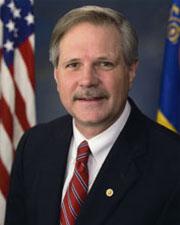
S.J. Res. 12 is a joint resolution introduced in the 119th Congress invoking the Congressional Review Act (CRA) to disapprove a specific Environmental Protection Agency (EPA) rule titled 'Waste Emissions Charge for Petroleum and Natural Gas Systems: Procedures for Facilitating Compliance, Including Netting and Exemptions.' This EPA rule, published in the Federal Register on November 18, 2024 (89 Fed. Reg. 91094), implements provisions of the Inflation Reduction Act of 2022 that established a methane emissions waste charge—a fee on excess methane emissions from oil and natural gas operations. The rule details procedures for calculating the charge, including mechanisms for companies to net emissions across facilities and apply for certain exemptions. By invoking the CRA, Congress seeks to nullify this rule entirely, meaning it would have no legal force or effect if the joint resolution passes both chambers and is signed by the President (or enacted over a veto). The resolution's sponsors, led by Senator Hoeven and joined by numerous Republican senators, argue the rule imposes unnecessary regulatory burdens on the energy sector, could increase energy costs for consumers, and represents federal overreach. They contend that market forces and existing regulations are sufficient to address methane emissions without this additional fee. Critics, including environmental advocates and many Democrats, argue that weakening or eliminating the methane waste charge undermines efforts to combat climate change, as methane is a potent greenhouse gas with significant near-term warming potential. They maintain the rule is a necessary implementation of congressional intent from the Inflation Reduction Act and provides flexibility to industry through netting and exemptions while ensuring accountability for excess emissions. If enacted, S.J. Res. 12 would prevent the EPA from enforcing the methane emissions fee and its associated compliance procedures, potentially affecting hundreds of oil and gas facilities nationwide and altering the economic incentives for methane leak detection and repair. The resolution represents a broader ideological struggle over the appropriate balance between environmental regulation and energy industry autonomy, with implications for U.S. climate policy and international commitments to reduce greenhouse gas emissions.

Ask This Bill

Ask a specific question about this bill’s actual text — answers cite the section they come from.
Read the full analysis on Congress.gov →

Where Each Party Stands

Democrats

MIGHT SUPPORT
+None identified from a Democratic perspective, as Democrats generally support the methane waste charge rule as a climate protection measure and would not view its disapproval as advantageous.
MIGHT OPPOSE
−Undermines efforts to combat climate change by removing a financial disincentive for excess methane emissions, a potent greenhouse gas with over 80 times the warming potential of carbon dioxide over a 20-year period.
−Weakens the implementation of the Inflation Reduction Act's methane emissions provisions, which were designed to reduce waste and capture valuable energy resources that would otherwise be leaked or flared.
−Could lead to increased air pollution and associated health risks in communities located near oil and gas facilities, particularly for volatile organic compounds and hazardous air pollutants often co-emitted with methane.
−Removes an important revenue source that could be used for environmental remediation or investments in clean energy technologies.
−Sends a negative signal about U.S. commitment to reducing greenhouse gas emissions, potentially affecting international climate diplomacy and cooperation.
−Eliminates regulatory flexibility mechanisms like netting and exemptions that were designed to reduce compliance burdens while maintaining environmental accountability.

Republicans

MIGHT SUPPORT
+Reduces regulatory burden on oil and natural gas operators, potentially lowering operational costs and preserving jobs in the energy sector.
+Prevents what Republicans view as federal overreach by the EPA in implementing a fee not explicitly detailed in the original Inflation Reduction Act legislation.
+Avoids potential increases in energy prices for consumers that could result from producers passing on compliance costs.
+Aligns with principles of energy dominance and supports U.S. energy independence by removing obstacles to fossil fuel production.
+Responds to concerns from industry stakeholders who argue the rule duplicates existing state and federal regulations on methane emissions.
MIGHT OPPOSE
−May be seen as prioritizing short-term industry interests over long-term environmental stewardship and climate change mitigation.
−Could complicate efforts to meet U.S. nationally determined contributions under the Paris Agreement by removing a tool to reduce methane emissions.
−Might lead to criticism that Congress is favoring special interests over public health and environmental protection, particularly in communities near oil and gas operations.
−Eliminates a market-based mechanism that could incentivize innovation in leak detection and emission reduction technologies.
−Creates regulatory uncertainty for companies that may have begun planning compliance strategies based on the expected rule.

History

Feb 27, 2025
Indefinitely postponed by Senate by Unanimous Consent.
Feb 27, 2025
Considered by Senate. (consideration: CR S1413)
Feb 26, 2025
Measure laid before Senate by motion. (consideration: CR S1391)
Feb 26, 2025
Motion to proceed to consideration of measure agreed to in Senate by Yea-Nay Vote. 52 - 47. Record Vote Number: 96. (CR S1391)
Feb 20, 2025
Senate Committee on Environment and Public Works discharged, by petition, pursuant to 5 U.S.C. 802(c).
Feb 20, 2025
Senate Committee on Environment and Public Works discharged, by petition, pursuant to 5 U.S.C. 802(c).
Feb 04, 2025
Read twice and referred to the Committee on Environment and Public Works.
Feb 04, 2025