Home  /  Recent Bills  /  GUARD VA Benefits Act
HOUSE · HR 1732 119 CONGRESS

GUARD VA Benefits Act

INTRODUCED
February 27, 2025
POLICY AREA
STATUS
Committee Hearings Held
SOURCE
Congress.gov ↗

Bill Summary

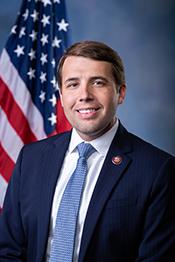
The GUARD VA Benefits Act (H.R. 1732) is a bipartisan congressional measure introduced in the U.S. House of Representatives on February 27, 2025. The bill seeks to amend title 38 of the United States Code to reinstate penalties for individuals who charge unauthorized fees to veterans for assistance with claims for benefits administered by the Secretary of Veterans Affairs. Specifically, Section 2 of the bill modifies Section 5905 of title 38 by: (1) changing the section heading from 'Penalty' to 'Penalties' and updating the corresponding table of contents; (2) inserting a subsection designation '(a) Withholding of Benefits.--' before the existing language regarding who may be penalized; and (3) adding a new subsection '(b) Charging of Unauthorized Fees.--' which prohibits any person from soliciting, contracting for, charging, receiving, or attempting to solicit, contract for, charge, or receive any fee or compensation related to the preparation, presentation, or prosecution of any veterans' benefits claim, except as provided in sections 5904 or 1984 of title 38. Violators would be subject to fines as provided in title 18 of the U.S. Code (federal criminal code). The bill is sponsored by Representative Chris Pappas (D-NH) and has 42 cosponsors from both parties, including Representatives Brian Fitzpatrick (R-PA), Jeff Van Drew (R-NJ), Bennie Thompson (D-MS), and others. The measure has been referred to the House Committee on Veterans' Affairs and the House Committee on the Judiciary for consideration. The GUARD VA Benefits Act aims to protect veterans from exploitation by unaccredited representatives who engage in predatory practices by charging fees for services that should be provided free of charge by accredited Veterans Service Organizations (VSOs), state officials, or attorneys. By reinstating penalties that may have been weakened or removed in previous legislation, the bill seeks to deter fraudulent activity and ensure veterans receive the full benefits they have earned through their service without unauthorized deductions or charges. The legislation addresses a recognized problem in the veterans' benefits system where bad actors take advantage of veterans' lack of familiarity with the complex claims process to extract money illegally. Supporters argue that the bill is necessary to uphold the integrity of the VA benefits system and protect vulnerable veterans from financial harm.

Ask This Bill

Ask a specific question about this bill’s actual text — answers cite the section they come from.
Read the full analysis on Congress.gov →

Where Each Party Stands

Democrats

MIGHT SUPPORT
+Protects veterans from financial exploitation by predatory actors charging illegal fees for VA benefits assistance
+Reinforces the principle that accredited representatives and VSOs provide free claims assistance as intended by law
+Creates a deterrent against fraud through potential criminal fines under Title 18
+Bipartisan sponsorship demonstrates broad consensus on protecting veterans from abuse
+Addresses a specific loophole where unaccredited representatives exploit veterans unfamiliar with the claims process
+Supports VA's mission to ensure veterans receive full benefits without unauthorized deductions
+Aligns with Democratic priorities of protecting vulnerable populations from exploitation
+Provides clear legal prohibition and penalty structure for unauthorized fee-charging activities
MIGHT OPPOSE
−May not address root causes of why veterans seek unauthorized help (e.g., complexity of VA system, lack of awareness about free accredited services)
−Enforcement challenges could limit effectiveness if violations are difficult to detect or prosecute
−Potential for unintended consequences if legitimate advocates are mistakenly targeted
−Does not directly increase funding for VA benefits outreach or accreditation programs to prevent the problem
−May create additional bureaucratic burden for VA in monitoring and reporting violations
−Focuses on punishment rather than prevention or education initiatives
−Could be seen as redundant if existing laws already prohibit such activities but are not enforced

Republicans

MIGHT SUPPORT
+Protects veterans' earned benefits from being diminished by illegal fees
+Supports law and order by establishing clear penalties for fraudulent activities
+Bipartisan nature shows Republican commitment to veterans' issues alongside Democrats
+Reinforces free market principles by ensuring veterans aren't coerced into paying for services that should be free
+Aligns with conservative values of protecting vulnerable populations from exploitation
+Strengthens oversight of the VA system without creating new bureaucratic agencies
+Uses existing legal frameworks (Title 18 fines) rather than creating new penalty structures
+Addresses a specific problem of bad actors exploiting federal programs for personal gain
MIGHT OPPOSE
−Concern that additional penalties may overcriminalize minor infractions or create unnecessary legal burdens
−Questions about whether existing laws already prohibit such activities and enforcement is the real issue
−Preference for market-based solutions where veterans could choose to pay for expedited service if desired (though this conflicts with current law prohibiting fees)
−Concern about potential federal overreach into what could be regulated at state or local levels
−Worry that legislation might distract from larger VA reform needs like accountability and efficiency
−Possible concern that resources spent on enforcement could be better used for direct veterans services
−Skepticism about whether the bill will be effectively implemented without significant oversight mechanisms

History

Mar 18, 2026
Committee Hearings Held
Mar 18, 2026
Subcommittee on Disability Assistance and Memorial Affairs Discharged
Mar 27, 2025
Referred to the Subcommittee on Disability Assistance and Memorial Affairs.
Feb 27, 2025
Referred to the Committee on Veterans' Affairs, and in addition to the Committee on the Judiciary, for a period to be subsequently determined by the Speaker, in each case for consideration of such provisions as fall within the jurisdiction of the committee concerned.
Feb 27, 2025
Feb 27, 2025
Introduced in House