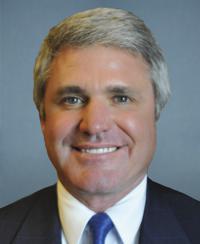
Referred to the Committee on Foreign Affairs, and in addition to the Committees on the Judiciary, Oversight and Government Reform, Financial Services, Ways and Means, Rules, and Energy and Commerce, for a period to be subsequently determined by the Speaker, in each case for consideration of such provisions as fall within the jurisdiction of the committee concerned.
The Lindsey O. Graham Sanctioning Russia and Iran Act of 2026 (H.R. 10076) is a comprehensive legislative package designed to impose and strengthen sanctions against the Russian Federation while also extending existing sanctions against Iran. The bill consists of two main titles: Title I focuses exclusively on sanctions against Russia, and Title II addresses the extension of the Iran Sanctions Act of 1996 along with severability and sunset provisions.
Title I establishes a wide-ranging sanctions regime targeting Russian government officials, entities affiliated with the Russian government, financial institutions, and various sectors of the Russian economy. Key provisions include: blocking property and assets of designated individuals and entities; prohibiting visas and entry to the United States for sanctioned persons; imposing restrictions on financial transactions with Russian banks; banning investment in Russia's energy sector; prohibiting the purchase of Russian sovereign debt by U.S. persons; restricting listing and trading of Russian entities on U.S. securities exchanges; increasing import duties on Russian-origin goods up to 500%; imposing additional duties on countries purchasing Russian oil or facilitating sanctions evasion; and banning uranium imports from Russia. The bill also includes numerous exceptions for humanitarian assistance, intelligence activities, compliance with international obligations, civilian nuclear cooperation, certain uranium imports, official government business, non-Russian oil transiting Russian territory, winddown operations, vessel safety, and NASA activities. Implementation mechanisms involve periodic reviews by the President, waiver authority with congressional reporting requirements, and termination procedures tied to specific conditions in Ukraine. Penalties for violations follow those outlined in the International Emergency Economic Powers Act. Title II simply extends the Iran Sanctions Act of 1996 from 2026 to 2031. The entire Act (except the Iran sanctions extension) contains a five-year sunset provision.
The bill reflects a bipartisan approach to countering Russian aggression, particularly in response to the ongoing conflict in Ukraine, while maintaining certain humanitarian and operational carve-outs. It represents one of the most comprehensive sanctions packages ever proposed against Russia, aiming to exert maximum economic pressure while providing off-ramps for diplomatic resolution.
Ask This Bill
Ask a specific question about this bill’s actual text — answers cite the section they come from.
+Imposes devastating economic pressure on Russia to deter further aggression and support Ukrainian sovereignty
+Creates a comprehensive framework that closes loopholes in existing sanctions regimes
+Includes strong humanitarian exceptions to ensure aid flows to civilians are not disrupted
+Places accountability on enablers of Russian aggression through secondary sanctions on countries facilitating evasion
+Extends critical Iran sanctions to prevent nuclear proliferation and counter Tehran's regional influence
+Builds on bipartisan consensus for a tough stance against authoritarian adversaries
+Provides presidential waiver flexibility while requiring congressional oversight and reporting
+Targets Russian elites and oligarchs who benefit from and enable the war effort
MIGHT OPPOSE
−Sanctions regimes often have mixed effectiveness and may not achieve desired behavioral change in target countries
−Humanitarian exceptions, while present, may not be sufficient to prevent collateral damage to Russian civilians
−Risk of overreach that could inadvertently impact legitimate business activities
−Extension of Iran sanctions may reduce diplomatic flexibility in addressing Tehran's nuclear program
−Could lead to retaliatory measures from Russia affecting U.S. interests globally
−Secondary sanctions on third countries might be seen as extraterritorial overreach
−Sanctions may incentivize Russia to deepen ties with China, Iran, and North Korea
−Five-year timeline may be insufficient to achieve strategic objectives in Ukraine
Republicans
MIGHT SUPPORT
+Strongly counters Russian aggression and supports Ukraine by imposing comprehensive economic costs on Russia's war machine
+Targets key sectors of the Russian economy including energy, finance, and defense to degrade Russia's ability to sustain military operations
+Includes robust enforcement mechanisms with regular review cycles and penalties for violators
+Provides clear path for sanction termination tied to concrete conditions in Ukraine (peace agreement and cessation of hostilities)
+Maintains important exceptions for humanitarian aid, intelligence operations, and official government functions to avoid unintended consequences
+Extends Iran sanctions to continue pressure on Tehran's nuclear program and malign activities
+Imposes significant financial costs on countries that facilitate Russian sanctions evasion through secondary tariffs
+Sunset provision ensures periodic congressional reevaluation of the sanctions regime
MIGHT OPPOSE
−Risk of provoking dangerous escalation with a nuclear-armed Russia
−Could harm American businesses and workers through disrupted trade and investment opportunities
−Secondary tariffs on countries buying Russian oil may strain alliances and disrupt global energy markets
−Complex implementation may create administrative burdens and enforcement challenges
−President could misuse waiver authority to undermine sanctions for political reasons
−Sanctions may hurt Russian civilians more than the Kremlin elite
−Five-year sunset creates uncertainty for long-term business planning
−May drive Russia closer to China and other adversaries, strengthening anti-Western blocs
History
Aug 10, 2026
Referred to the Committee on Foreign Affairs, and in addition to the Committees on the Judiciary, Oversight and Government Reform, Financial Services, Ways and Means, Rules, and Energy and Commerce, for a period to be subsequently determined by the Speaker, in each case for consideration of such provisions as fall within the jurisdiction of the committee concerned.