
Bill Summary
S. 32, the Local Access to Courts Act (LACA), is a narrowly tailored court-organization bill that makes two specific changes to where federal district courts may hold proceedings in Texas and California. It amends Title 28 of the United States Code to authorize additional locations for holding court, without creating new judgeships, altering jurisdiction, or changing substantive law. Its thrust is to improve geographic access to federal courts for residents, litigants, jurors, and law enforcement in regions that are distant from existing courthouses.
Section 2 addresses Texas. Title 28, Section 124 organizes Texas into federal judicial districts and their divisions, and specifies cities where court may be held. The bill amends Section 124(b)(2), which concerns the Southern District of Texas, by adding “and College Station” to the list of authorized locations. College Station—home to Texas A&M University and a fast-growing Brazos Valley population—sits well north of Houston. Under current law, many litigants and witnesses in that region may have to travel substantial distances (often to Houston) for hearings, trials, and jury service. By adding College Station as a permissible venue for holding court within the Southern District’s relevant division, the bill gives the judiciary flexibility to convene proceedings closer to affected communities. This is permissive authority: it allows, but does not require, the court to schedule sessions there. Implementation details—such as whether to assign a resident magistrate judge, how often to sit, and which cases to calendar—would be determined by the judiciary in light of caseload, facilities, and security.
Section 3 addresses California’s Southern District by amending Title 28, Section 84(d) to add “and El Centro” after “at San Diego.” The Southern District of California currently holds court at San Diego. El Centro, the seat of Imperial County near the U.S.–Mexico border, is more than 100 miles east. Border-related criminal cases (including immigration and drug interdiction matters), agricultural labor disputes, and local federal civil litigation often originate in Imperial County, making travel to San Diego time-consuming and costly for defendants, victims, witnesses, jurors, attorneys, and federal agents. Authorizing the court to hold sessions in El Centro equips the judiciary to site proceedings nearer to the locus of the events and the communities involved, potentially reducing transportation burdens, improving timely access to counsel, and alleviating congestion at the main courthouse in San Diego.
Pros
- Improves access to justice for rural, student, immigrant, and low‑income communities by reducing travel time and costs to attend hearings, serve on juries, or meet with counsel.
- Enhances due process by enabling quicker initial appearances and reducing delays caused by transporting defendants long distances, particularly in the Southern District of California.
- Can diversify and localize juries in ways that reflect the communities most affected by federal actions (e.g., farmworker and border communities in Imperial County).
- Potentially reduces court backlogs in San Diego and Houston by allowing some calendars to be held closer to the origin of cases.
- Lowers burdens on victims and witnesses, which can improve participation in prosecutions and civil rights enforcement actions.
- Offers a low‑cost, administrative improvement without changing substantive rights or requiring new judgeships.
- Facilitates better coordination with local community services (interpreters, social services, reentry programs) that support defendants and litigants.
- Signals federal recognition of underserved regions, aligning with equity goals and environmental justice considerations for localized civil disputes.
- Strengthens local access and responsiveness by bringing the federal court closer to the communities where cases arise, reducing burdens on ranchers, small businesses, and local law enforcement.
- Supports border security and law‑and‑order by enabling quicker processing of border‑related criminal cases in El Centro, closer to the point of interdiction.
- Reduces travel and overtime costs for U.S. Marshals, Border Patrol, and other agencies that currently transport detainees and evidence to San Diego or Houston.
- Promotes civic engagement and respect for the rule of law by making jury service and court attendance more feasible for ordinary citizens.
- A pragmatic, bipartisan, low‑cost tweak to court operations that does not expand federal jurisdiction or create new judgeships.
- Improves efficiency and can help relieve congestion at major courthouses, speeding adjudication for businesses and victims.
- College Station is a logical addition given regional growth and existing federal presence; it can serve a large, conservative‑leaning community without requiring new infrastructure at scale.
Cons
- Risk that expanded border sittings in El Centro could be used to accelerate high‑volume immigration prosecutions, raising concerns about due process, access to counsel, and mass hearings.
- Localized jury pools in certain divisions could skew demographic and ideological composition, potentially disadvantaging civil rights plaintiffs, labor, or environmental litigants in some venues.
- Resources spent on additional facilities and security might be better directed to public defender staffing, interpreter services, or legal aid.
- Fragmentation of dockets across more locations can strain overstretched defense counsel and legal services who must cover multiple courthouses.
- Potential for forum shopping if parties seek to influence jury pools or perceived judge assignments based on where the court sits.
- If facilities are inadequate, makeshift courtrooms could compromise accessibility features or privacy protections for vulnerable participants.
- Without safeguards, transportation of detained migrants to El Centro facilities might still pose humanitarian and logistical challenges.
- Adds federal operational footprints and potential ongoing costs (facilities, security, staffing) that may be underutilized or duplicative.
- Creates opportunities for venue maneuvering and forum shopping, potentially leading to less predictable litigation environments for businesses and agencies.
- Smaller, localized jury pools may be less balanced and could deliver inconsistent outcomes across a district.
- Diffusing court sittings can strain U.S. Attorney and agency resources as staff must cover more locations, potentially reducing efficiency gains.
- Security challenges and costs may be higher in border regions like El Centro, requiring additional Marshal presence and hardened facilities.
- If caseloads do not materialize, the added locations risk becoming symbolic rather than cost‑effective.
- Expanding places of holding court without parallel investments in detention, probation, and IT could lead to piecemeal operations and logistical headaches.
This bill was introduced on January 08, 2025 in the Senate.
View on Congress.gov:
https://www.congress.gov/bill/119th-congress/senate-bill/32
-
Feb 13, 2025
Held at the desk.
H15000
-
Feb 13, 2025
Received in the House.
H14000
-
Feb 13, 2025
Message on Senate action sent to the House.
-
Feb 12, 2025
Passed Senate without amendment by Unanimous Consent. (consideration: CR S932; text: CR S932)
-
Feb 12, 2025
Passed/agreed to in Senate: Passed Senate without amendment by Unanimous Consent.
17000
-
Feb 12, 2025
Senate Committee on the Judiciary discharged by Unanimous Consent.
-
Feb 12, 2025
Senate Committee on the Judiciary discharged by Unanimous Consent.
14500
-
Jan 08, 2025
Read twice and referred to the Committee on the Judiciary.
-
Jan 08, 2025
Introduced in Senate
10000
This bill has not yet been enacted into law.

Sponsors
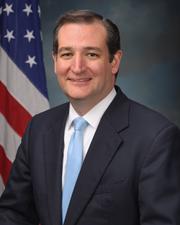
TX District 0
Republican
Policy Area: Law
Associated Legislative Subjects
- California
- State and local courts
- Texas