
Bill Summary
What this bill does in plain terms: it creates a new type of Pell Grant, called a Workforce Pell Grant, that low-income students can use for short, job-focused training programs starting with the 2026–2027 award year. It amends the Higher Education Act to add a new subsection to the existing Pell Grant statute. The basic idea is to let Pell dollars support high-quality, short programs that quickly prepare people for in-demand jobs, while putting in place strong guardrails so taxpayer money only goes to programs that deliver results.
Who can get the grant: A student must already meet the normal Pell eligibility rules, but they have to be enrolled (or accepted for enrollment) in a qualifying “eligible workforce program.” The bill excludes anyone enrolled in a graduate-level program and anyone who already has a graduate credential. Students cannot receive a Workforce Pell and a regular Pell (or another special Pell under subsection (c)) at the same time. Any term covered by a Workforce Pell counts toward the student’s overall Pell lifetime limit.
How the grant is awarded: The Department of Education must award Workforce Pell Grants under the same general rules as regular Pell, with two notable differences. First, wherever Pell rules refer to an “eligible program,” for these grants it means an “eligible workforce program” as newly defined. Second, even if a program is so short that a student’s Pell calculation would be below the normal minimum Pell award, the student can still receive a prorated Workforce Pell amount based on the program’s length. That’s important because these programs are intentionally short.
Pros
- Expands Pell access to short-term, job-focused training for low-income learners, supporting rapid reskilling and reemployment.
- Strong quality guardrails (70% completion and 70% job placement) reduce the risk of low-value programs and protect students and taxpayers.
- Requires alignment with in-demand, high-wage sectors and employer hiring criteria, helping ensure training leads to real jobs.
- Mandates stackable, portable credentials and guaranteed academic credit toward certificates or degrees, promoting educational mobility and pathways rather than dead-end credentials.
- Affordability check using an earnings-based cap discourages overpriced programs and tuition inflation.
- State workforce involvement and use of Perkins/WIOA definitions embed the program in existing economic development and labor frameworks.
- Prohibits double-dipping and counts toward lifetime Pell cap, adding fiscal discipline.
- Allows provisional eligibility with evidence requirements, creating an on-ramp for innovative programs while maintaining accountability.
- Targets federal aid to short, practical programs that quickly fill in-demand jobs and address skills gaps.
- Strong, outcomes-based accountability (70% completion, 70% placement, and earnings-based tuition caps) helps ensure a solid return on taxpayer investment.
- Empowers states—via Governors and workforce boards—to certify labor market alignment, reducing Washington micromanagement while tying programs to local needs.
- Allows innovative non-traditional providers to participate (with guardrails), increasing competition and spurring faster, lower-cost training options beyond traditional academia.
- Prevents double benefits and prorates awards to match short program length, improving program integrity and cost-effectiveness.
- Requires stackable credentials and credit pipelines, encouraging efficient pathways from training to higher-level qualifications without creating dead ends.
- Blocks correspondence-course abuses and requires a one-year track record before approval, screening out unproven offerings.
- Provisional eligibility lets promising new programs come online quickly while proving value with rigorous data.
Cons
- Opens Title IV funds to non-accredited providers, which raises concerns about consumer protection, oversight capacity, and the potential for predatory actors.
- Reliance on Governors for program determinations may politicize approvals and produce uneven standards across states.
- High completion and placement thresholds could incentivize providers to “cream-skim” easier-to-serve students, limiting access for those with barriers and undermining equity goals.
- The earnings-based price cap, tied to 150% of the poverty line, may undervalue programs in socially vital but lower-wage fields (e.g., caregiving) and in low-wage regions, even when public benefits are high.
- Data collection for verified completion, placement, and earnings—especially within 180 days—can be complex and subject to gaming or inconsistent methodologies.
- Counting Workforce Pell toward the lifetime Pell limit may penalize students who later pursue longer credentials or degrees by consuming finite eligibility on short-term programs.
- Mandatory credit acceptance across institutions could be difficult to implement and may strain transfer systems without additional resources.
- Guardrails may be too stringent and bureaucratic, keeping many legitimate programs out—especially small providers—thus limiting choice and responsiveness to market needs.
- The earnings-based tuition cap resembles federal price controls and may stifle provider flexibility and innovation, particularly in niche or high-cost technical fields.
- Federal verification of completion, placement, and earnings imposes reporting burdens and could delay approvals due to data lags.
- Mandated academic credit acceptance could be seen as federal overreach into institutional autonomy and curricular control.
- The 70% thresholds and 180-day placement window may not fit cyclical industries or regions with seasonal hiring, unfairly penalizing otherwise strong programs.
- Requiring a one-year operating history before approval slows down rapid response to emerging industry needs and technological changes.
This bill was introduced on May 08, 2025 in the Senate.
View on Congress.gov:
https://www.congress.gov/bill/119th-congress/senate-bill/1683
-
May 08, 2025
Read twice and referred to the Committee on Health, Education, Labor, and Pensions.
-
May 08, 2025
Introduced in Senate
10000
This bill has not yet been enacted into law.

Sponsors
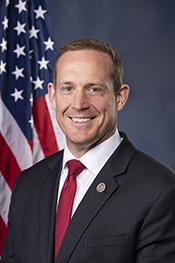
NC District 0
Republican
Policy Area: Education