Bill Summary
H.R. 631, the “Protecting Americans’ Right To Silence Act of 2025” (PARTS Act), is a targeted rewrite of the federal definition of “firearm silencer” and “firearm muffler” in 18 U.S.C. § 921(a)(25). The bill’s core purpose is to narrow and clarify what counts as a regulated silencer by focusing regulation on the complete device and its primary housing, while explicitly excluding mounts, adapters, and most individual internal components from being deemed silencers on their own.
Under current federal law, a “firearm silencer” or “muffler” is defined broadly as any device for reducing a firearm’s report, “including any combination of parts” designed or intended for assembling a silencer, and any part intended only for such assembly. That sweeping language has allowed the Bureau of Alcohol, Tobacco, Firearms and Explosives (ATF) to classify not only complete suppressors but also kits, individual baffles, wipes, monocores, and certain “solvent traps” and mounts as silencers or silencer parts subject to National Firearms Act (NFA) controls. Possession, transfer, or manufacture of those items typically requires NFA registration, a tax stamp, and compliance with strict transfer rules, and violations carry severe penalties.
H.R. 631 replaces that broad “combination of parts” framework with a more limited two-prong definition:
Pros
- Clarifies and narrows an overbroad statutory definition that has swept in ambiguous items and created inconsistent ATF classifications, reducing arbitrary enforcement risks.
- Reduces criminalization of innocuous parts and mitigates constructive-possession prosecutions when no complete suppressor or primary housing is present.
- Maintains core NFA controls on complete suppressors and the main housing, preserving background checks, tax, and registration for the functional device.
- Could lower regulatory friction for legitimate manufacturers and repair services, improving compliance and safety by encouraging lawful replacement and maintenance rather than illicit workarounds.
- Bipartisan sponsorship suggests a pragmatic, limited reform rather than a wholesale deregulation of suppressors.
- Reins in ATF overreach by stopping the classification of mounts, adapters, and internal parts as silencers and focusing regulation on the actual device or its main housing.
- Protects lawful gun owners and industry by enabling purchase of repair/replacement components without redundant tax stamps or fear of constructive-possession charges.
- Encourages innovation and competition in suppressor technology (especially modular and user-serviceable designs) while keeping complete devices under the existing NFA.
- Reduces bureaucratic workload and uncertainty for manufacturers and ATF by clearly delineating what is and is not a silencer, improving regulatory clarity and compliance.
- Affirms Second Amendment-aligned priorities by supporting safer shooting practices and hearing protection without fully deregulating suppressors.
Cons
- May make it easier for bad actors to assemble functional suppressors by sourcing unregulated internal components, complicating prevention and early intervention by law enforcement.
- Eliminating “combination of parts” coverage could undermine cases against trafficking rings selling kits designed to be easily completed, potentially increasing illicit market availability.
- Ambiguity around “primary housing” and “primary structure” in modular or novel designs could spawn litigation and create loopholes that manufacturers or offenders exploit.
- Explicitly excluding mounts/adapters from the definition may facilitate rapid swapping among firearms and complicate traceability and interdiction efforts.
- Could contribute to a long-term normalization and proliferation of suppressors, raising concerns about the detectability of gunfire in public spaces and officer safety.
- Law-and-order conservatives may worry that narrowing the definition could unintentionally ease criminal access to suppressor components and impede proactive enforcement.
- The bill does not go far enough for some gun-rights advocates who want suppressors removed from the NFA entirely; it keeps tax stamps, wait times, and registrations for complete devices.
- Potential for short-term confusion as ATF updates guidance and industry practices shift, with uneven state-level rules still creating a patchwork of compliance burdens.
- Ambiguities around what constitutes the “primary housing” in complex or modular designs could invite continued ATF interpretive power and litigation, undermining the clarity goal.
This bill was introduced on January 22, 2025 in the House.
View on Congress.gov:
https://www.congress.gov/bill/119th-congress/house-bill/631
-
Jan 22, 2025
Referred to the House Committee on the Judiciary.
H11100
-
Jan 22, 2025
Introduced in House
Intro-H
-
Jan 22, 2025
Introduced in House
1000
This bill has not yet been enacted into law.

Sponsors
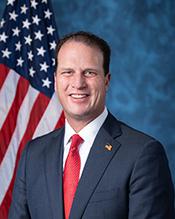
TX District 11
Republican
Policy Area: Crime and Law Enforcement
Associated Legislative Subjects
- Firearms and explosives