Bill Summary
What the bill does, in plain terms: It rewrites part of the international tax rules to undo a 2017 change that unexpectedly swept many foreign corporations into the “controlled foreign corporation” (CFC) regime through what’s called downward attribution. At the same time, it installs a narrower, more targeted backstop so that U.S. subsidiaries that are effectively controlled by a foreign parent can still be required to pick up Subpart F and GILTI income when they are, in substance, in control of a foreign affiliate.
How the current law got here: Before 2017, the tax code blocked “downward attribution” from a foreign person to a U.S. person when determining whether a foreign company was a CFC and who counted as a “U.S. shareholder.” That rule lived in section 958(b)(4). The 2017 tax law (TCJA) repealed that limitation. As a result, when a foreign parent owned both a U.S. subsidiary and a foreign subsidiary, the U.S. subsidiary could be treated as constructively owning the foreign subsidiary’s stock—even if it had no actual ownership—making the foreign subsidiary a CFC. That triggered Subpart F and GILTI inclusions and extensive reporting for many U.S. companies that didn’t truly control those foreign corporations, producing compliance burdens and “phantom income” issues.
What this bill changes:
Pros
- Fixes an acknowledged TCJA problem that created CFC status and tax inclusions for U.S. companies with no real economic ownership, reducing administrative burdens without rewarding avoidance.
- Adds a targeted backstop (section 951B) so that anti-deferral rules like Subpart F and GILTI still apply where a U.S. entity is effectively in majority control, protecting the U.S. tax base.
- Focuses enforcement where control truly exists (more than 50%), rather than sweeping in incidental 10% holdings, aligning rules with substance-over-form principles.
- Grants Treasury regulatory authority to close loopholes and coordinate with other international provisions, strengthening anti-avoidance capacity.
- Offers clearer, more predictable rules, which improves compliance and enables the IRS to allocate resources to higher-risk cases of base erosion and profit shifting.
- Restores the pre-2017 limitation on downward attribution and corrects a widely acknowledged TCJA drafting problem that caused “phantom CFCs” and expensive, unnecessary compliance for U.S. businesses.
- Reduces barriers for inbound investment by eliminating unintended Subpart F/GILTI inclusions for U.S. subsidiaries of foreign multinationals that don’t truly own foreign affiliates.
- Targets anti-abuse with a narrower, majority-control standard (over 50%) rather than a sweeping 10% threshold, striking a pro-growth balance between competitiveness and base protection.
- Provides certainty and simplifies life for many taxpayers and practitioners by reversing an overbroad rule that generated Forms 5471, GILTI calculations, and E&P tracking for entities with no real control.
- Bipartisan framing improves prospects for durable policy, reducing the risk of frequent rule changes that undermine planning and investment.
Cons
- Raising the threshold to “more than 50 percent” could invite planning to keep ownership at or below 50%, potentially allowing income shifting to avoid GILTI and Subpart F relative to current law.
- Overall revenue may decline compared with the post-2017 regime, potentially undermining international tax reform goals unless Treasury’s anti-avoidance rules are robust.
- Creating a parallel foreign-controlled regime adds complexity and may create new gray areas, which sophisticated taxpayers could exploit.
- The broad regulatory delegation is necessary but could be inconsistently applied over time; some Democrats may prefer clearer statutory anti-abuse rules and guardrails.
- The effective-date design and transition could allow some taxpayers to time transactions, and the “no inference” clause may frustrate efforts to litigate aggressive past positions.
- The new section 951B reimposes Subpart F/GILTI exposure on foreign-parented groups in certain cases, which some will see as an unnecessary new layer instead of a clean rollback.
- Treasury’s broad authority to extend these concepts to other parts of the Code could recreate complexity and uncertainty through regulation rather than statute.
- Maintaining a dual-track regime (traditional CFC rules plus the new foreign-controlled regime) keeps compliance costs elevated and may complicate guidance and audits.
- The more-than-50% threshold still requires intricate constructive ownership analyses and could lead to disputes over control, limiting the hoped-for simplification.
- Transition timing and partial retroactivity to fiscal years may create short-term planning and systems burdens for businesses and tax administrators.
This bill was introduced on March 18, 2025 in the House.
View on Congress.gov:
https://www.congress.gov/bill/119th-congress/house-bill/2186
-
Mar 18, 2025
Referred to the House Committee on Ways and Means.
H11100
-
Mar 18, 2025
Introduced in House
Intro-H
-
Mar 18, 2025
Introduced in House
1000
This bill has not yet been enacted into law.

Sponsors
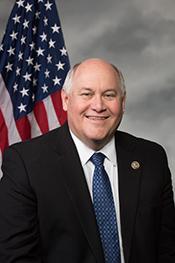
KS District 4
Republican
Policy Area: Taxation